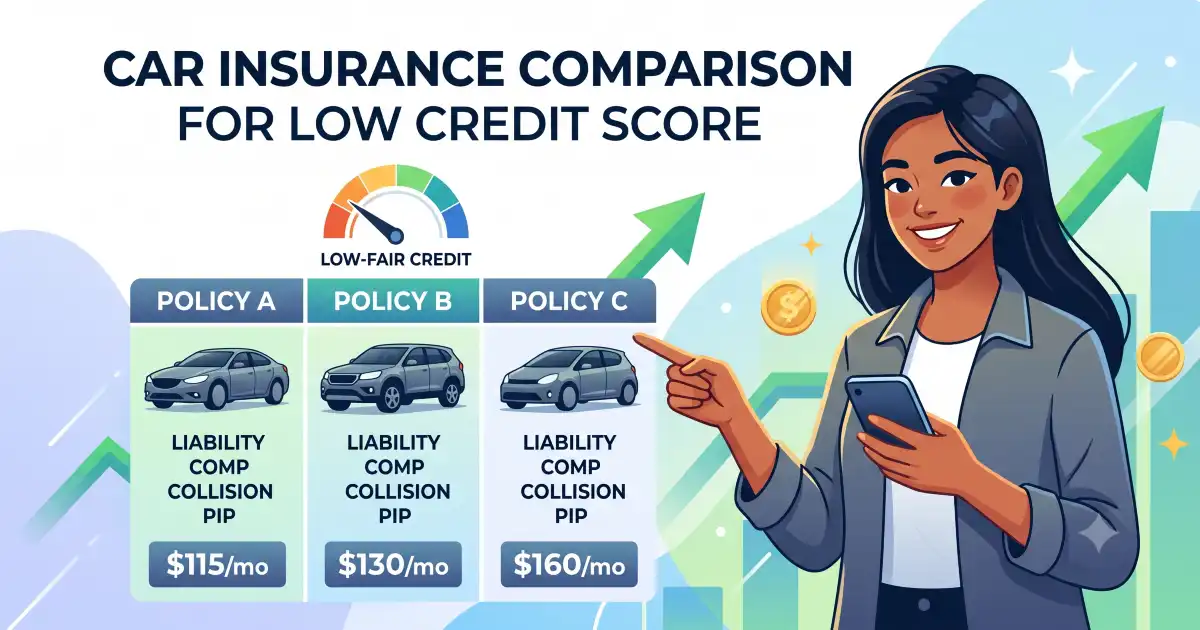
If you’ve ever gotten a car insurance quote that made you do a double take, there’s a good chance your credit score had something to do with it. In most states, insurers are allowed to use a version of your credit history — often called a credit-based insurance score — to help decide your premium. It feels unfair, especially if you’ve never missed a car payment in your life, but understanding how it works puts you in a much better position to fight back and find a fair rate.
Why Credit Score Affects Your Car Insurance Rate
Insurance companies have found, through decades of data, that people with lower credit scores statistically file more claims. Whether or not that feels logical to you personally, it’s the reason your premium can jump even if your driving record is spotless. The credit-based insurance score isn’t identical to your regular FICO score — it weighs different factors, like payment history and collections, more heavily than things like length of credit history.
States Where Credit Doesn’t Matter
Before you assume you’re stuck paying more, check your state. California, Hawaii, Massachusetts, and Michigan all ban or restrict the use of credit scores in setting car insurance rates. If you live in one of these states, your credit history won’t factor into your quote at all, so you can skip straight to comparing coverage and price.
Start With Multiple Online Quotes
The fastest way to find a fair rate is to gather quotes from several insurers at once rather than calling one company at a time. Sites like The Zebra, Insurify, and Gabi pull quotes from dozens of carriers in a few minutes, letting you see real price differences side by side. Since each insurer weighs credit differently, what looks expensive with one company might be completely reasonable with another.
Look Beyond the Big Names
Major insurers like Progressive, State Farm, and Geico all factor in credit, but they don’t all weigh it the same way. Some smaller or regional insurers put less emphasis on credit and more on driving record, vehicle type, or location. Don’t assume the company you’ve heard of most is automatically your cheapest option — run the comparison and let the numbers talk.
Ask About Non-Standard or High-Risk Insurers
If your credit score is low enough that mainstream insurers are quoting sky-high premiums, non-standard insurers like The General or Direct Auto specialize in exactly this situation. Rates here can still be higher than average, but they’re often more competitive than what a traditional insurer will offer someone they consider high-risk across the board.
Bundle Policies to Offset the Cost
Combining your auto policy with renters or homeowners insurance through the same company can shave a meaningful chunk off your total premium. Even with a lower credit score working against you, the bundling discount can sometimes outweigh the credit penalty entirely, especially with insurers that reward loyalty heavily.
Raise Your Deductible Carefully
Choosing a higher deductible lowers your monthly premium, but only do this if you actually have that amount saved in case of an accident. A $1,000 deductible instead of $500 might knock a real amount off your monthly bill, but it’s only a smart move if you won’t be scrambling to cover it later.
Improve Your Credit While You Shop
Car insurance rates usually get reassessed every six months to a year, so any credit improvement you make now can lower your premium down the line. Paying down credit card balances, catching up on any late payments, and disputing errors on your credit report are all moves that help both your loan applications and your insurance rate at the same time.
Check for Usage-Based Insurance Programs
Programs like Progressive’s Snapshot or State Farm’s Drive Safe & Save track your actual driving habits through an app or device, rather than relying heavily on credit. If you’re a careful driver, this can offset a low credit score significantly, since the insurer is pricing you based on real behavior instead of a financial snapshot.
Don’t Skip Comparing Every Year
Insurance pricing models change constantly, and so does your credit. A company that quoted you a high rate last year might be your cheapest option this year, or vice versa. Set a calendar reminder to re-shop your policy annually, even if you’re happy with your current insurer — loyalty rarely pays off as much as comparison shopping does.
The Bottom Line
A low credit score makes car insurance shopping more frustrating, but it doesn’t lock you into a bad rate forever. Compare quotes across multiple sites, look at insurers beyond the household names, consider bundling and usage-based programs, and keep working on your credit in the background. The combination of smart shopping now and credit improvement over time is how you actually bring that premium down.