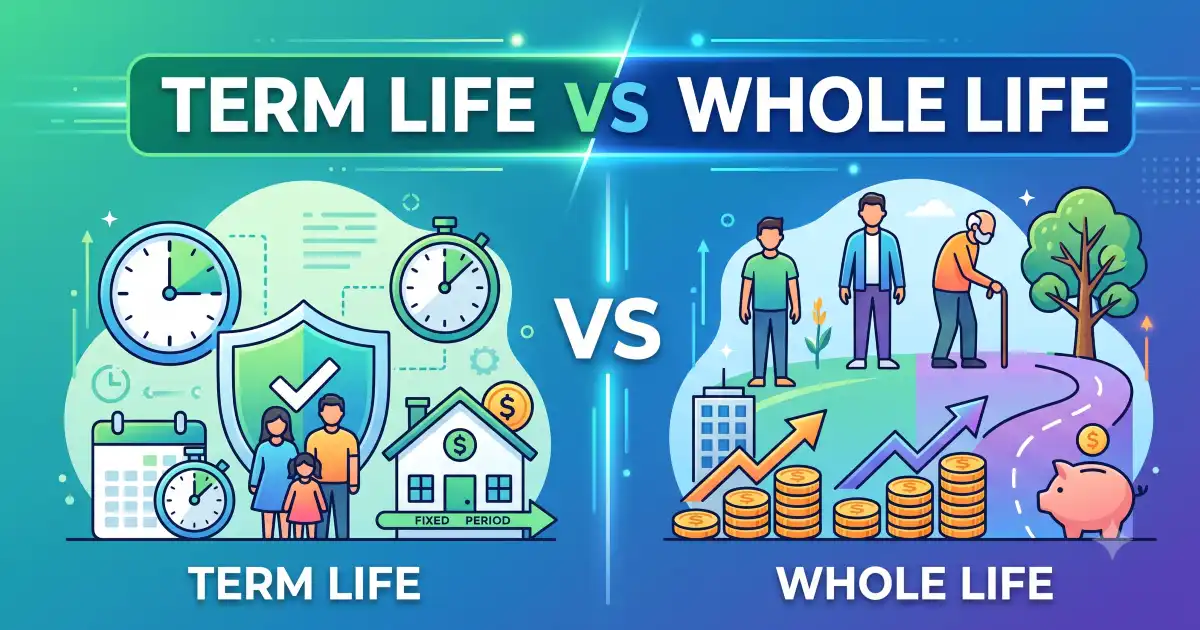
Choosing the right life insurance policy is an important financial decision. Whether you want to protect your family’s future, cover outstanding debts, or leave a financial legacy, selecting the right type of coverage can make a significant difference. The two most common options are term life insurance and whole life insurance. While both provide financial protection for your loved ones, they work in very different ways.
Understanding the differences between term life insurance vs whole life insurance can help you choose a policy that fits your financial goals, budget, and long-term needs.
What Is Term Life Insurance?
Term life insurance provides coverage for a specific period, such as 10, 20, or 30 years. If the insured person passes away during the policy term, the beneficiaries receive a death benefit. However, if the policy expires before the insured dies, the coverage ends unless the policy is renewed or converted.
Because it offers temporary protection without a savings or investment component, term life insurance is generally the most affordable option.
What Is Whole Life Insurance?
Whole life insurance is a type of permanent life insurance that provides coverage for the insured’s entire lifetime, as long as premiums are paid. In addition to the death benefit, whole life policies build cash value over time. This cash value grows on a tax-deferred basis and may be borrowed against or withdrawn under certain conditions.
Whole life insurance typically has higher premiums because it combines lifelong protection with a savings feature.
Key Differences Between Term Life Insurance and Whole Life Insurance
| Feature | Term Life Insurance | Whole Life Insurance |
|---|---|---|
| Coverage Duration | Fixed term (10–30 years) | Lifetime coverage |
| Premium Cost | Usually lower | Usually higher |
| Cash Value | No | Yes |
| Death Benefit | Paid if death occurs during the term | Guaranteed as long as premiums are paid |
| Investment Component | None | Includes cash value growth |
| Best For | Affordable temporary protection | Long-term financial planning |
Benefits of Term Life Insurance
- Lower monthly or annual premiums.
- Simple and easy to understand.
- Ideal for young families and homeowners.
- Provides high coverage at an affordable cost.
- Suitable for covering temporary financial responsibilities.
Benefits of Whole Life Insurance
- Lifetime insurance coverage.
- Builds cash value over time.
- Fixed premiums that generally do not increase.
- Can support estate planning goals.
- Offers guaranteed death benefits for beneficiaries.
Who Should Choose Term Life Insurance?
Term life insurance is often a good choice for people who want affordable coverage during their working years. It is especially useful for parents with young children, individuals paying off a mortgage, or anyone who wants financial protection until major debts are repaid. If your primary goal is maximizing coverage while keeping premiums low, term life insurance may be the better option.
Who Should Choose Whole Life Insurance?
Whole life insurance may be suitable for individuals seeking lifelong coverage and a policy that builds cash value. It is commonly chosen by those interested in estate planning, leaving an inheritance, or creating a financial asset that can be accessed during their lifetime. Although premiums are higher, the long-term benefits may appeal to people with stable financial resources.
Factors to Consider Before Choosing
Before purchasing any life insurance policy, consider your current income, family responsibilities, outstanding debts, future financial goals, and overall budget. You should also think about how long your dependents may need financial support and whether building cash value is important to your financial strategy.
Conclusion
When comparing term life insurance vs whole life insurance, there is no single option that fits everyone. Term life insurance offers affordable protection for a specific period, making it an excellent choice for families seeking cost-effective coverage. Whole life insurance provides permanent protection while building cash value, making it attractive for long-term financial planning and wealth preservation.
The right policy depends on your financial situation, future goals, and personal priorities. By carefully evaluating your needs and comparing available options, you can choose life insurance that provides peace of mind and financial security for the people who matter most.